FUT2 gene mutation

By Russell Browne (Dip. Adv. Nut.) · Specialist in Genetic Nutrition & Methylation Protocols
The FUT2 changes people call a “mutation” are common polymorphisms (variants), not rare defects. This page explains what the FUT2 gene does, what the research supports around the gut and B12, and what we observe in practice.
What is a FUT2 gene mutation?
A FUT2 “mutation” — more accurately a common gene polymorphism or variant — is a widespread variation that can influence how this gene and its enzyme work. These are common variants that shift relative likelihoods, not switches that determine your health.
What the FUT2 gene does
FUT2 influences whether you are a “secretor” — whether certain blood-group molecules appear in body secretions and on the lining of the gut. This in turn relates to the composition of the gut microbiome and to how the body handles some nutrients.
Want to go deeper on gut health and genetics?
Gut Genes – The Genetic Advantage by Russell Browne is a plain-English guide to how genes like FUT2 and DAO relate to the gut microbiome, histamine, and how your body handles certain foods and nutrients — an ideal companion to your variant report.
FUT2 and secretor status
Secretor versus non-secretor status (set by FUT2) is discussed in relation to the gut microbiome, vitamin B12 levels, and susceptibility to certain gut infections. As with the other genes here, any effect is relative and interacts with diet, environment, and overall health.
FUT2 Variants: What the Research Shows, and What We See in Practice
There is a lot written about these genes online, and much of it overstates the case. We separate two kinds of information: what the published research has found, and — kept distinct from it — the patterns we have observed in clinical practice.
What the research shows
FUT2 variants (secretor vs non-secretor status) have been studied for associations with gut microbiome differences, vitamin B12 levels, and susceptibility to certain gut infections, with population-level findings.
Three things are essential to keep in view about this research:
- These variants are common — a large share of the population carries them.
- The findings are associations — relative shifts in likelihood across groups — not causation. A variant does not, by itself, cause any condition.
- Many people who carry these variants experience none of the associated patterns. Genes are one influence among many.
What we observe in clinical practice
In practice we consider secretor status as one factor when looking at gut health and B12 as part of a wider picture — not a stand-alone diagnosis or a reason to act on a genotype alone. Relevant nutrient status is confirmed with testing and reviewed with your practitioner. These are clinical observations, considered case by case.
How to find your FUT2 result
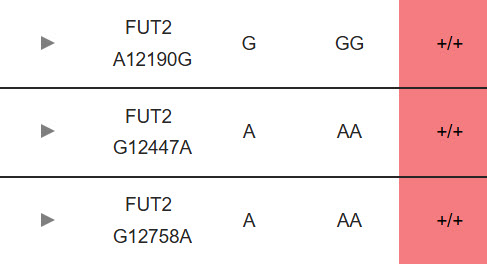
Your existing 23andMe or AncestryDNA raw data file already contains your FUT2 markers — you do not need a new test. Uploading it produces a plain-language variant report showing your FUT2 result (and many others), which you can then review with your practitioner in the context of your whole health picture.
Order or view your report · Find a practitioner
Important note
This page is educational and is not a diagnosis or a treatment plan. These variants are common and shift relative likelihood, not certainty; many people who carry them experience none of the patterns described here. The clinical observations reflect what we have seen in practice and will not apply to everyone. Anything you wish to act on should be assessed individually with a qualified practitioner who can consider your full history, symptoms, and any relevant testing.
About the Author
Russell Browne (Dip. Adv. Nut.)
Specialist in Genetic Nutrition & Methylation Protocols
Russell Browne is a qualified practitioner of Advanced Nutrition, Advanced Herbalism, and Homeopathy, with a specialized clinical focus on genetic nutrition, methylation pathways, and detoxification. With years of dedicated clinical experience helping patients decode complex chronic health issues, Russell is also the author of How to Treat Your MTHFR Gene Mutations the Right Way – The Genetic Advantage and several works on genetic wellness. He is committed to bridging the gap between complex genetic data and practical, root-cause clinical care.
Read Russell’s Full Professional Profile & Clinical Credentials
View Published Genetic Health Literature & Books